Japanese Tattoos
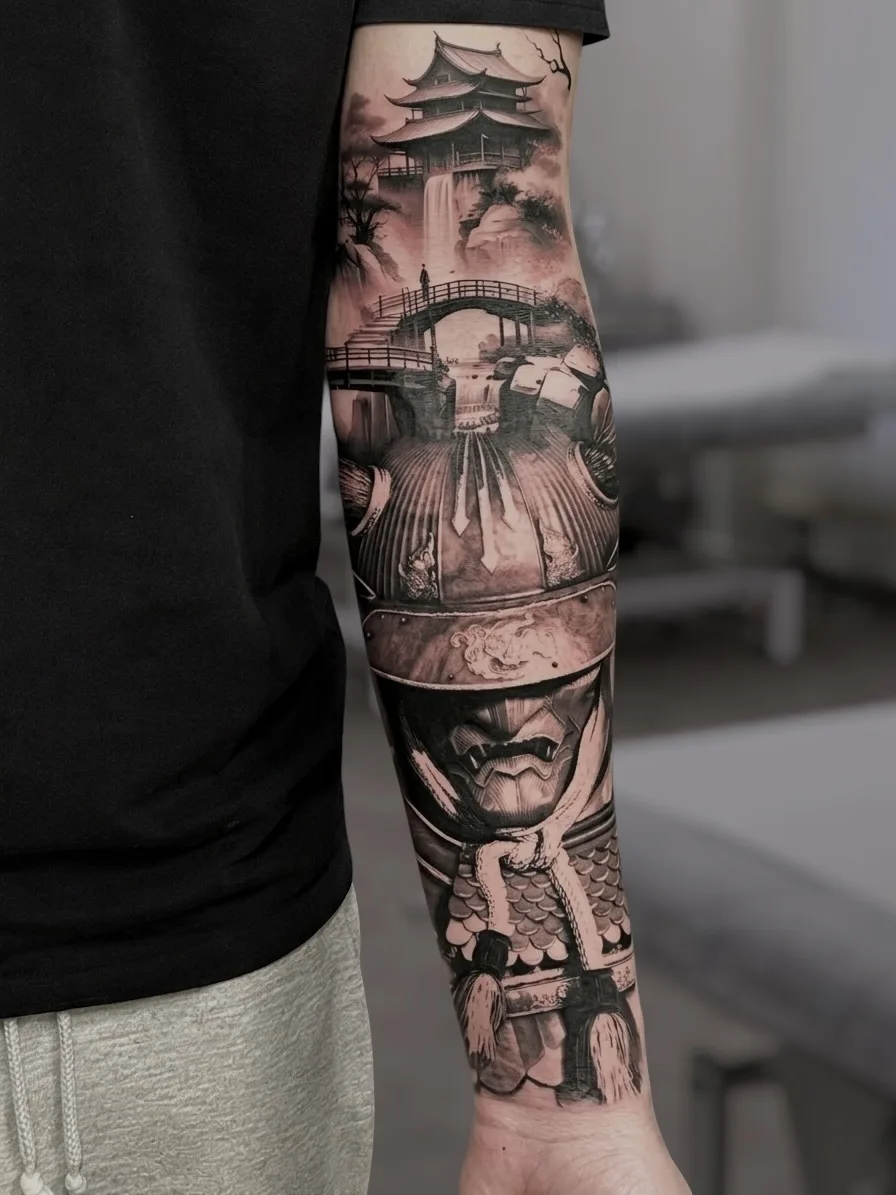
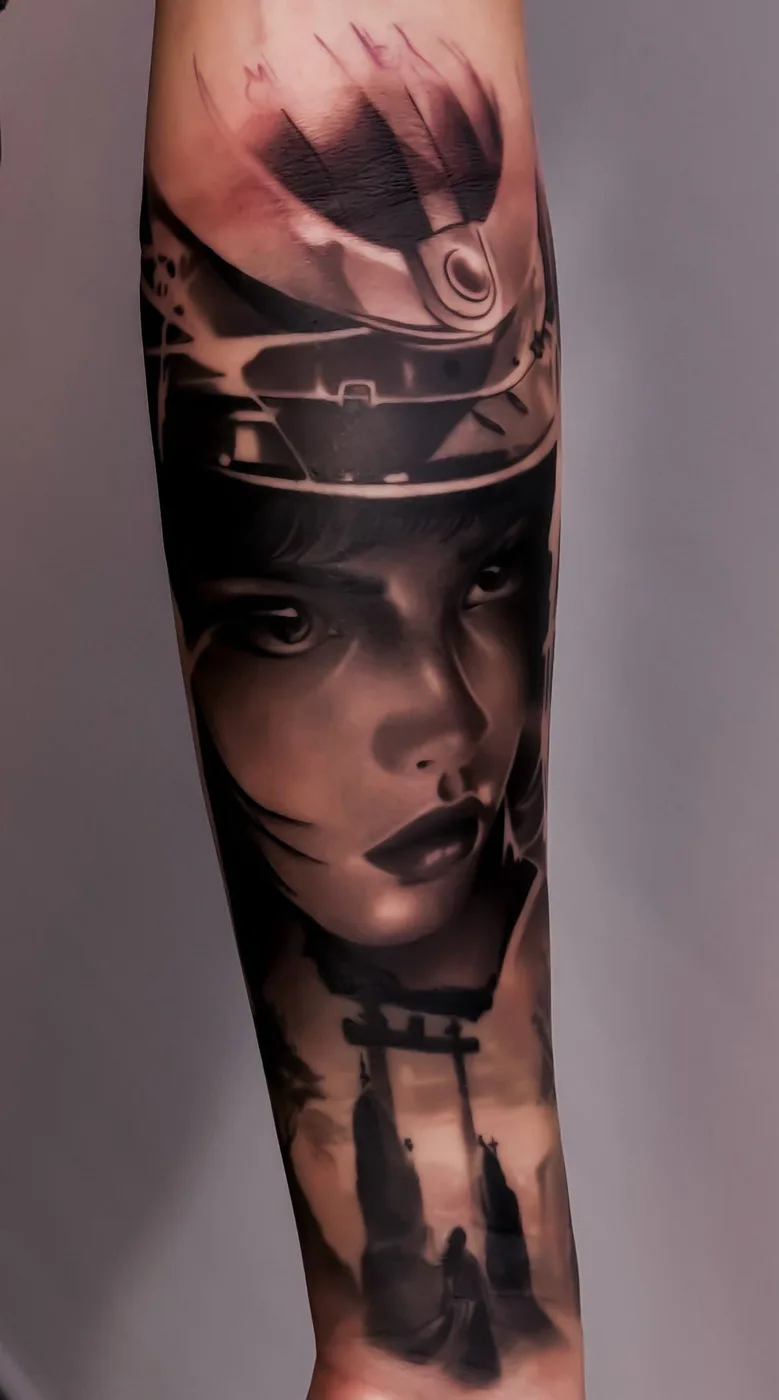
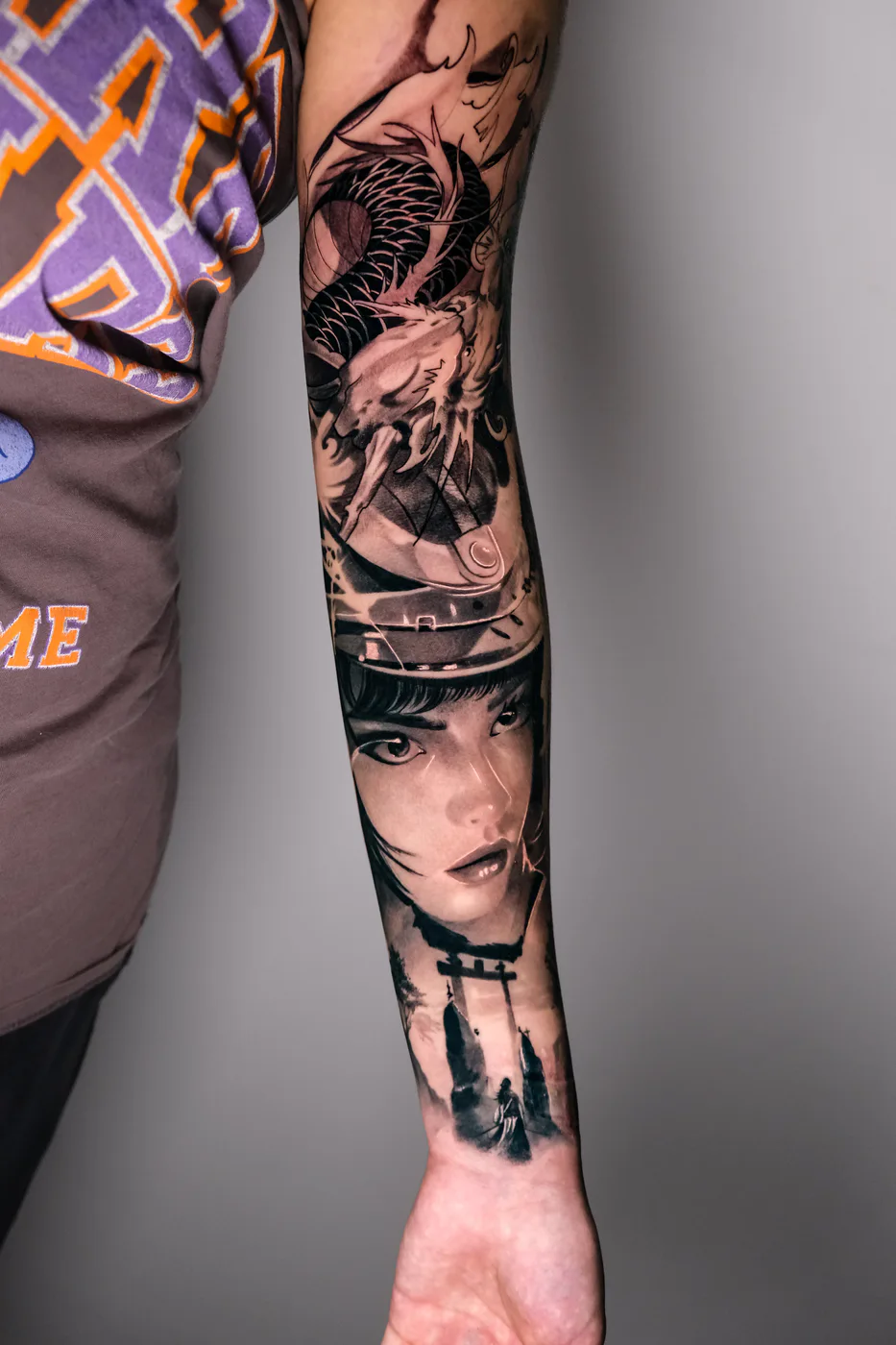
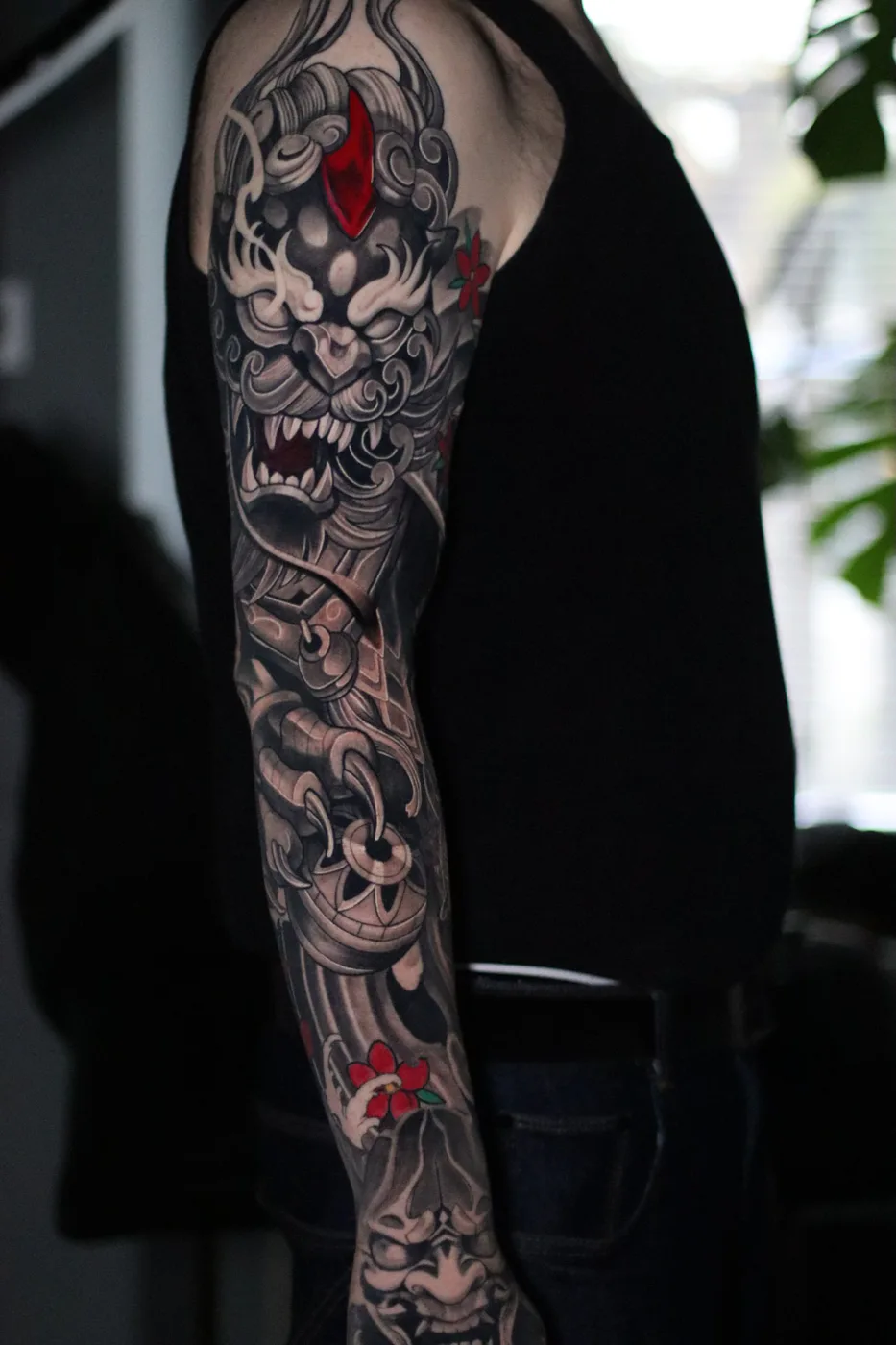
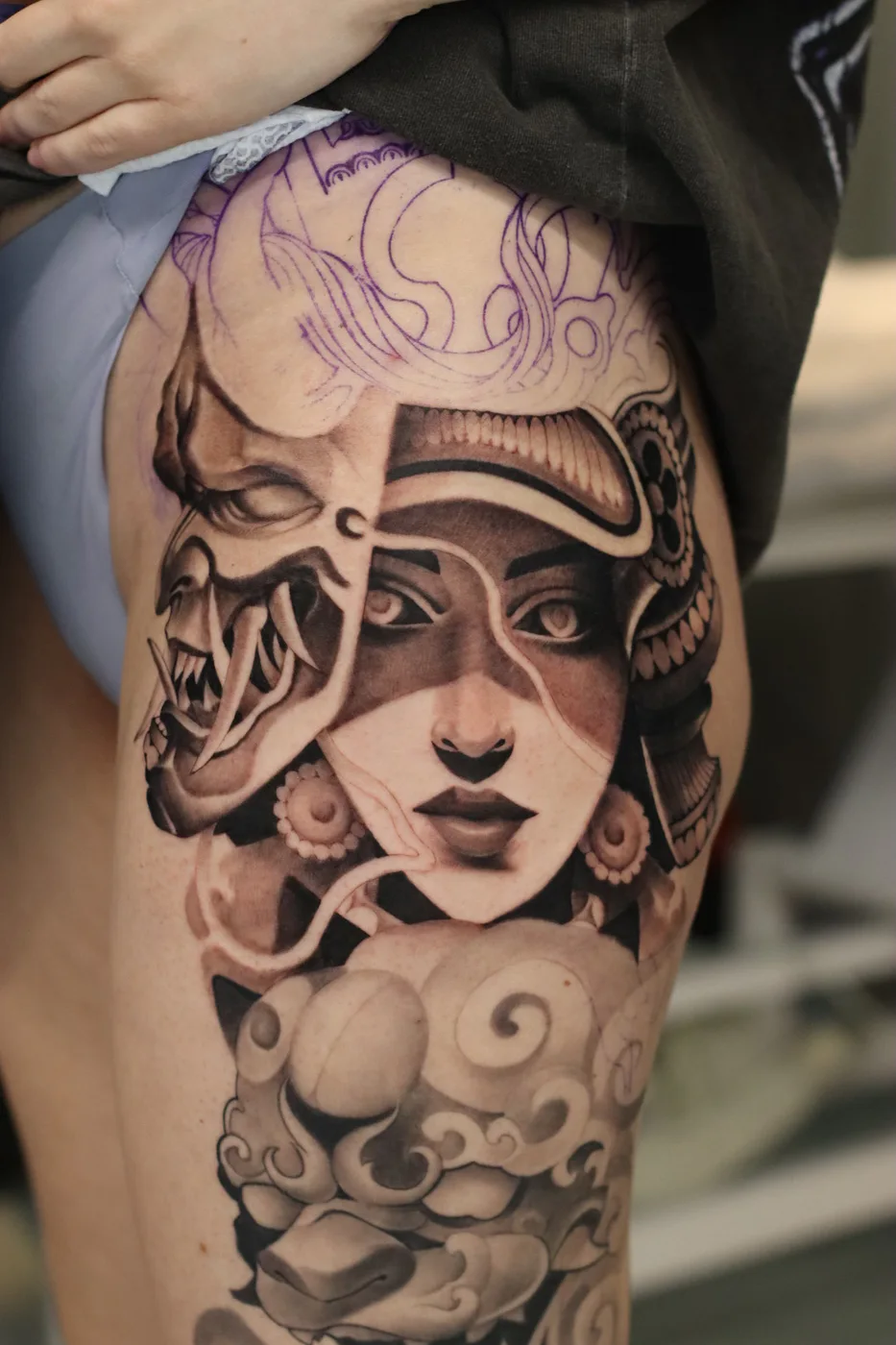
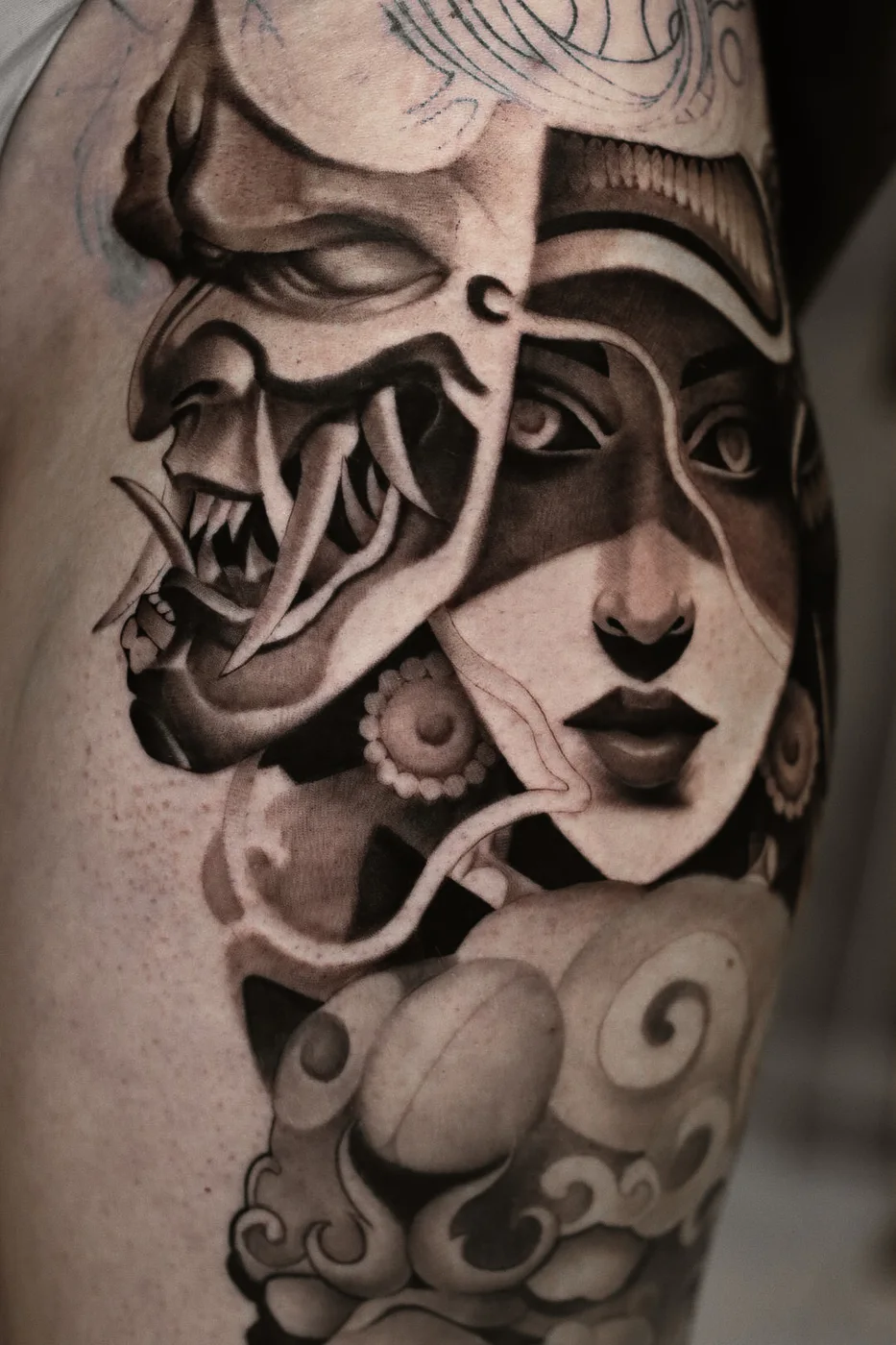
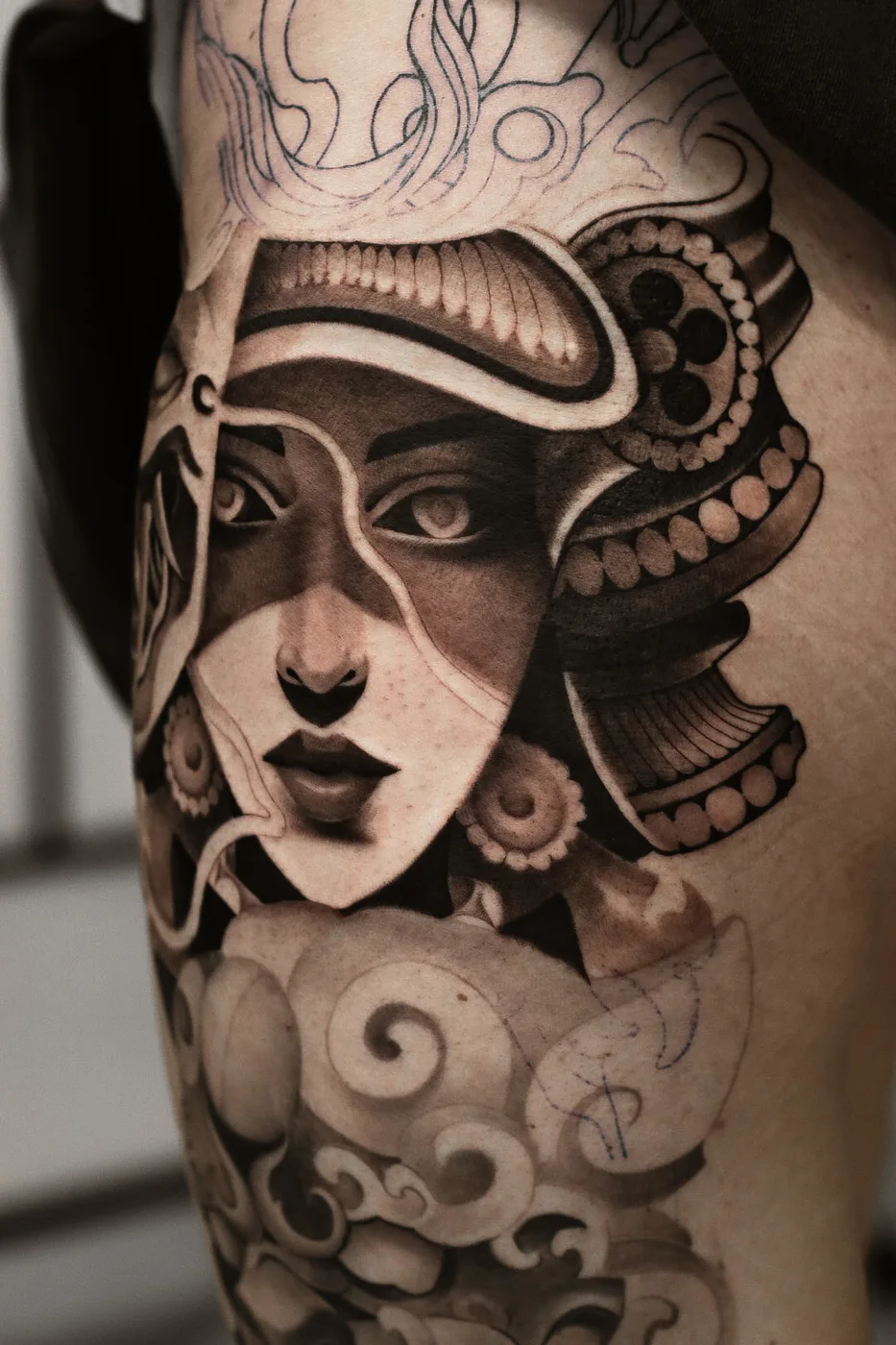
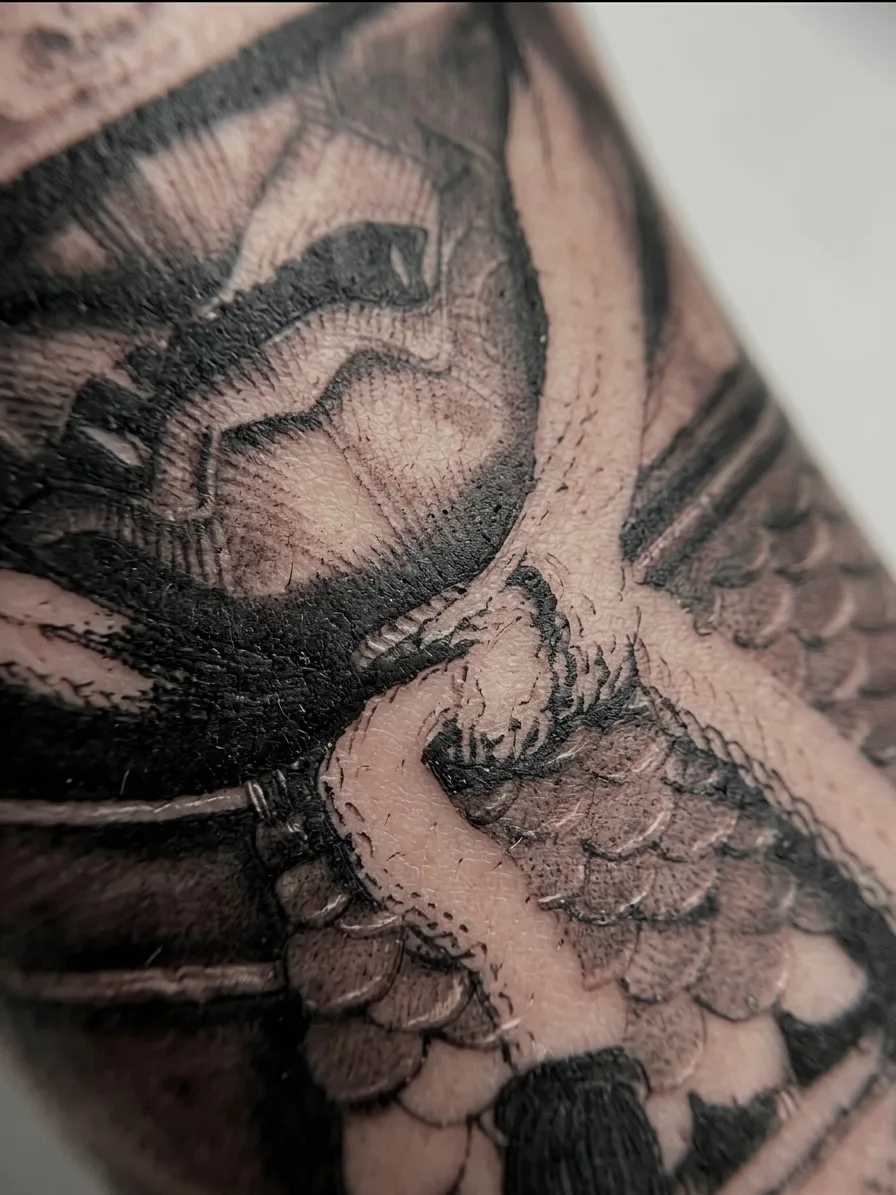
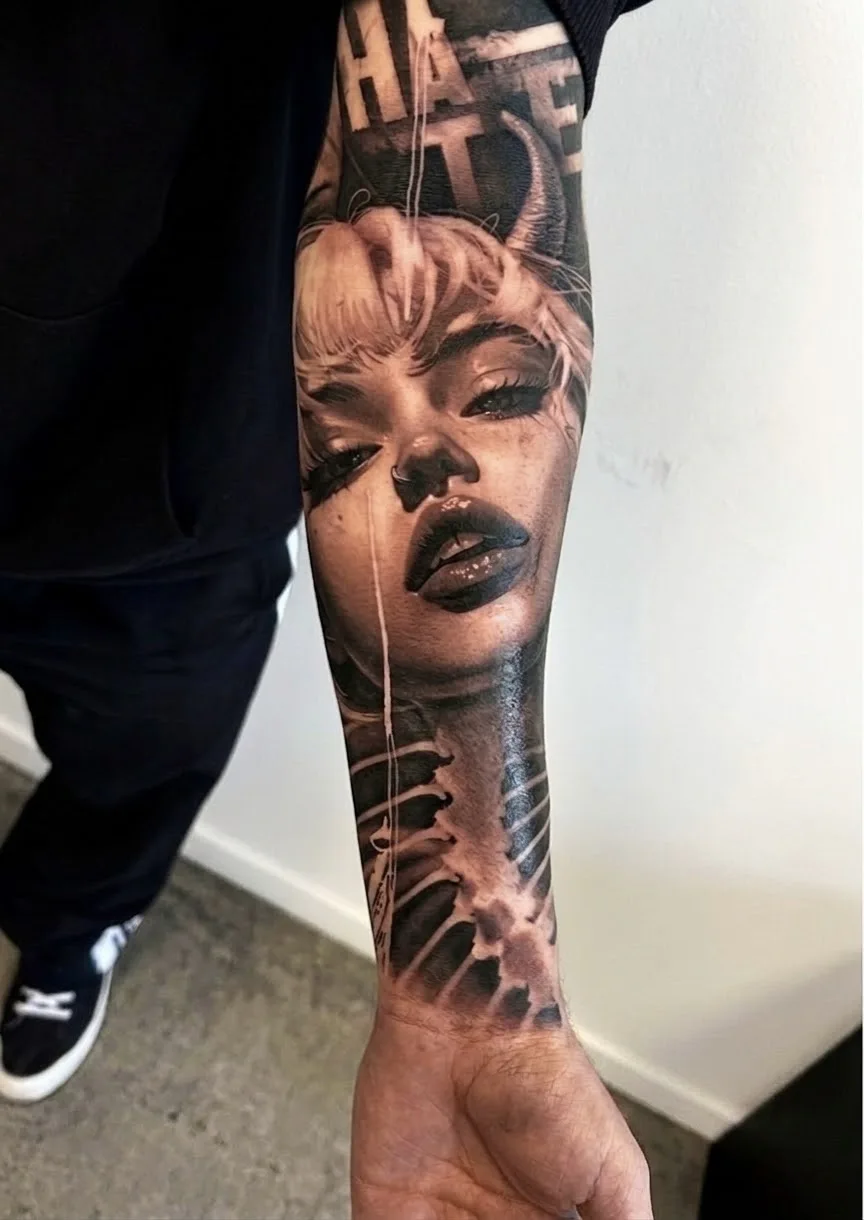
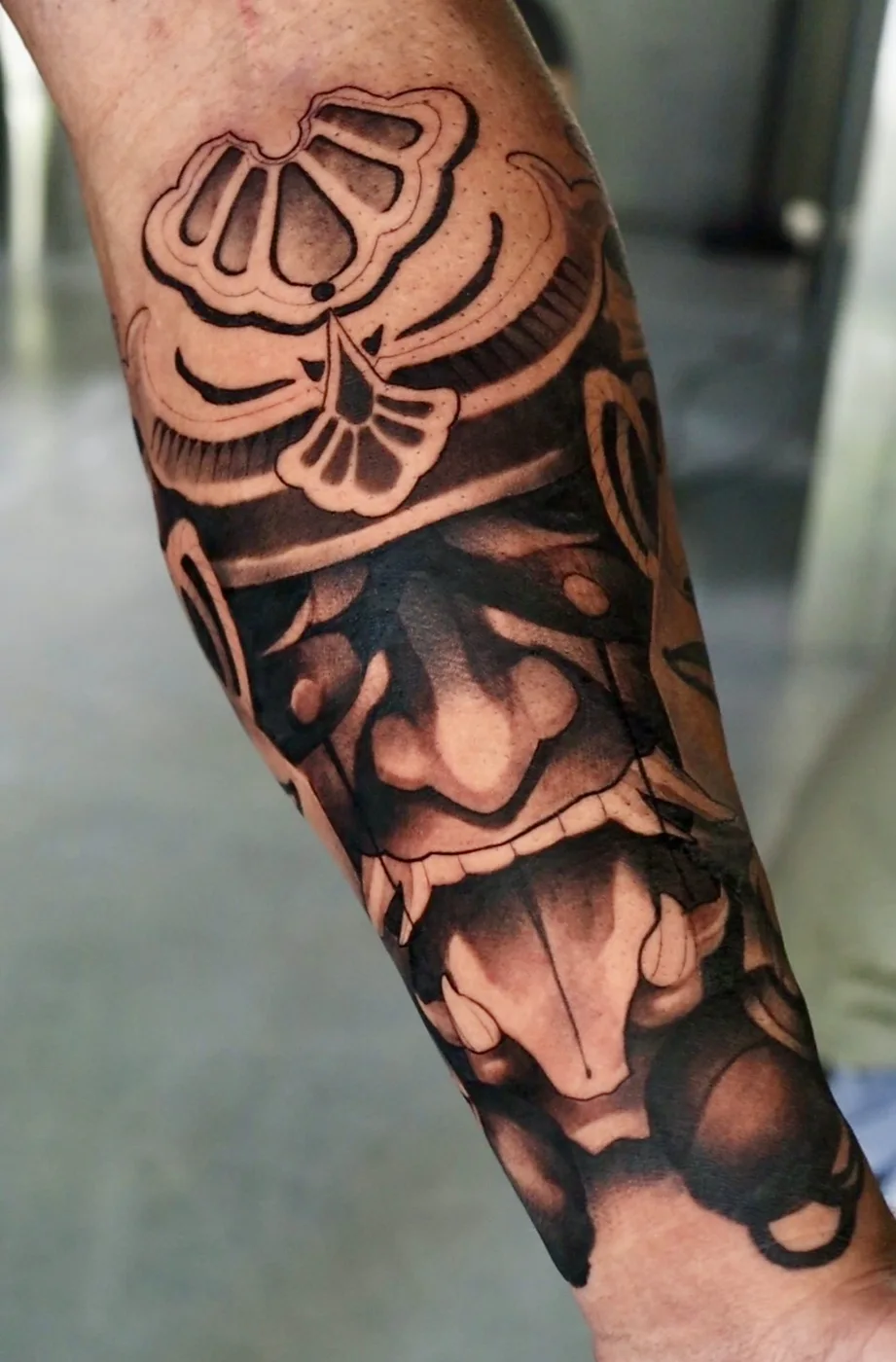
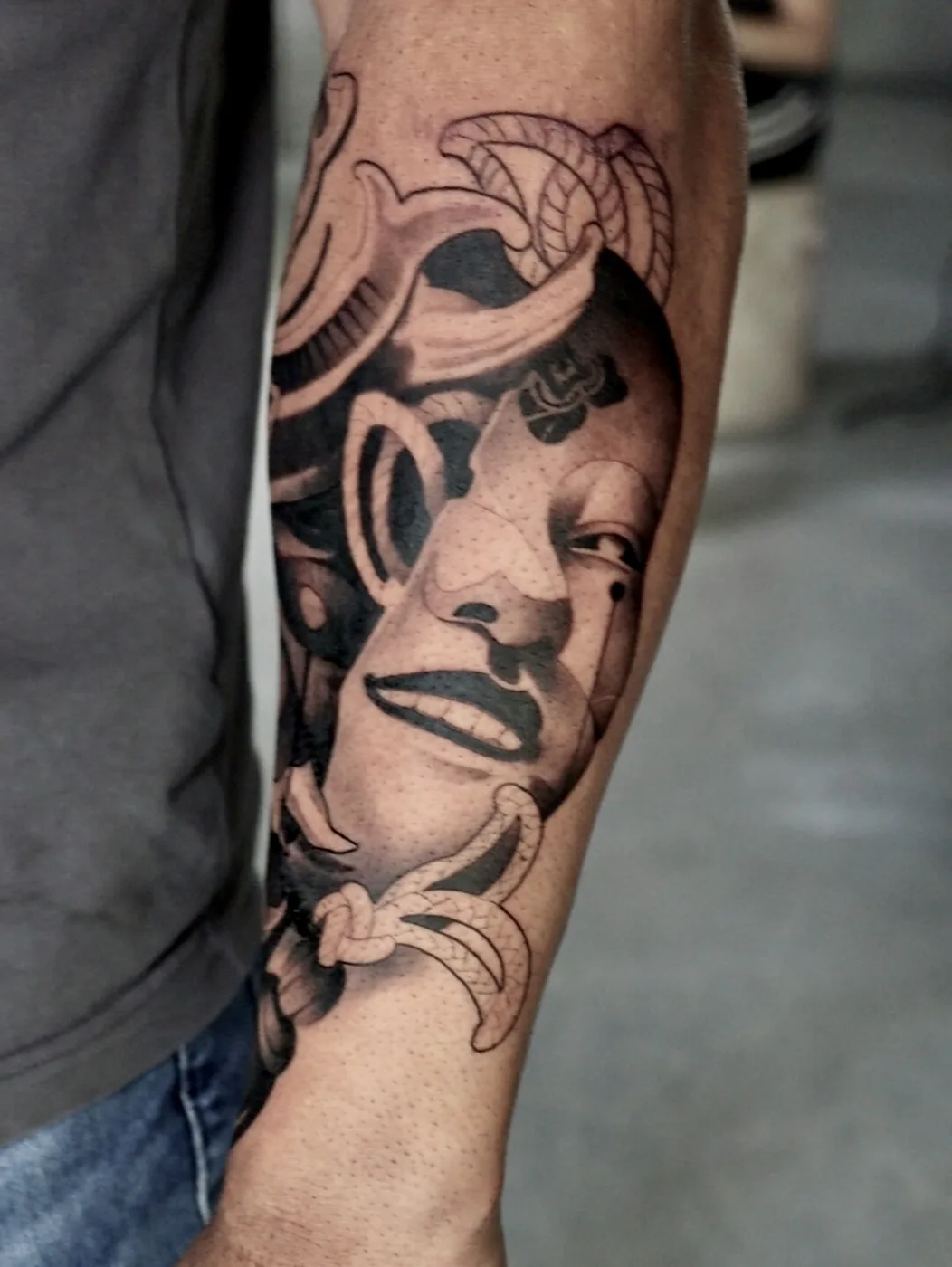
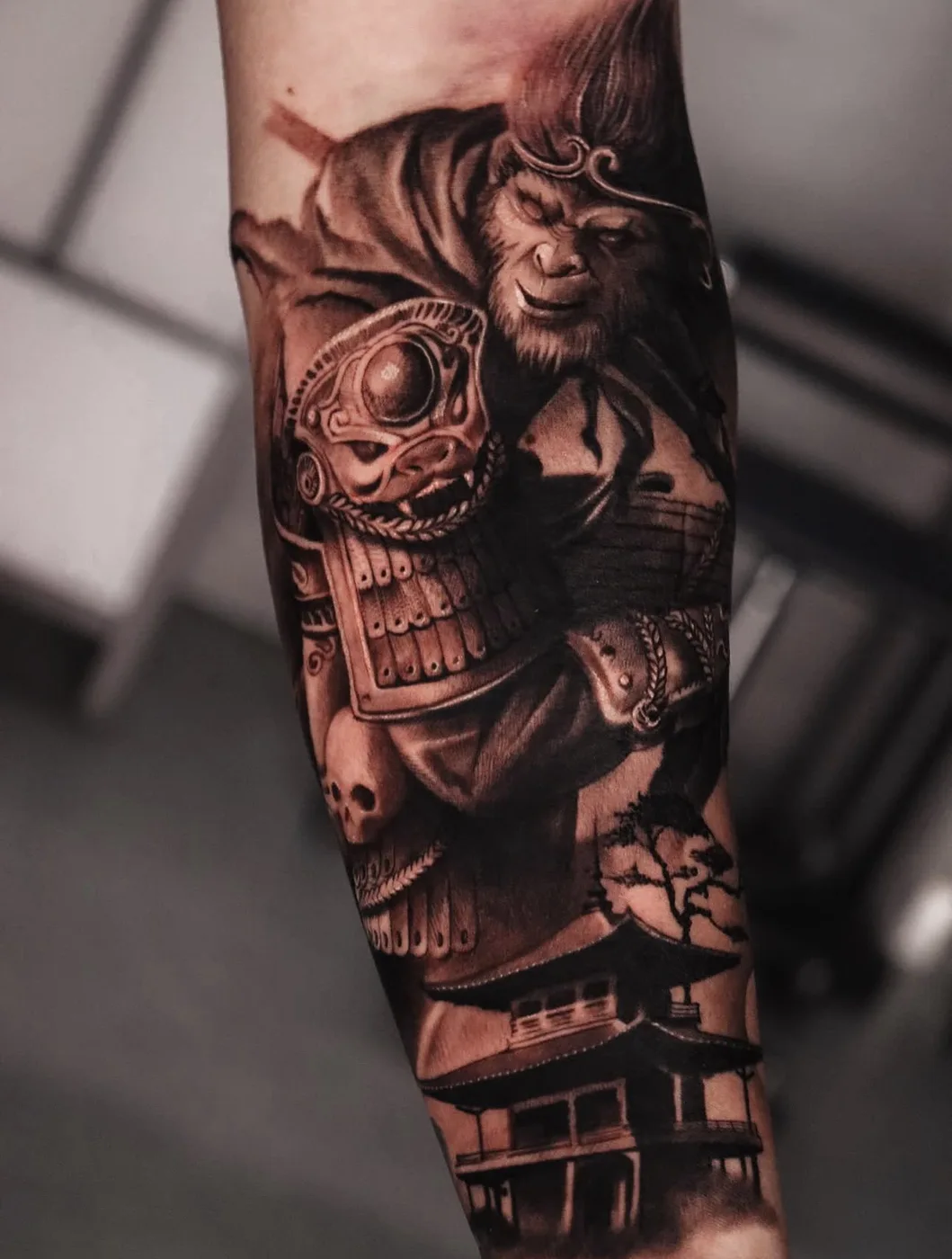
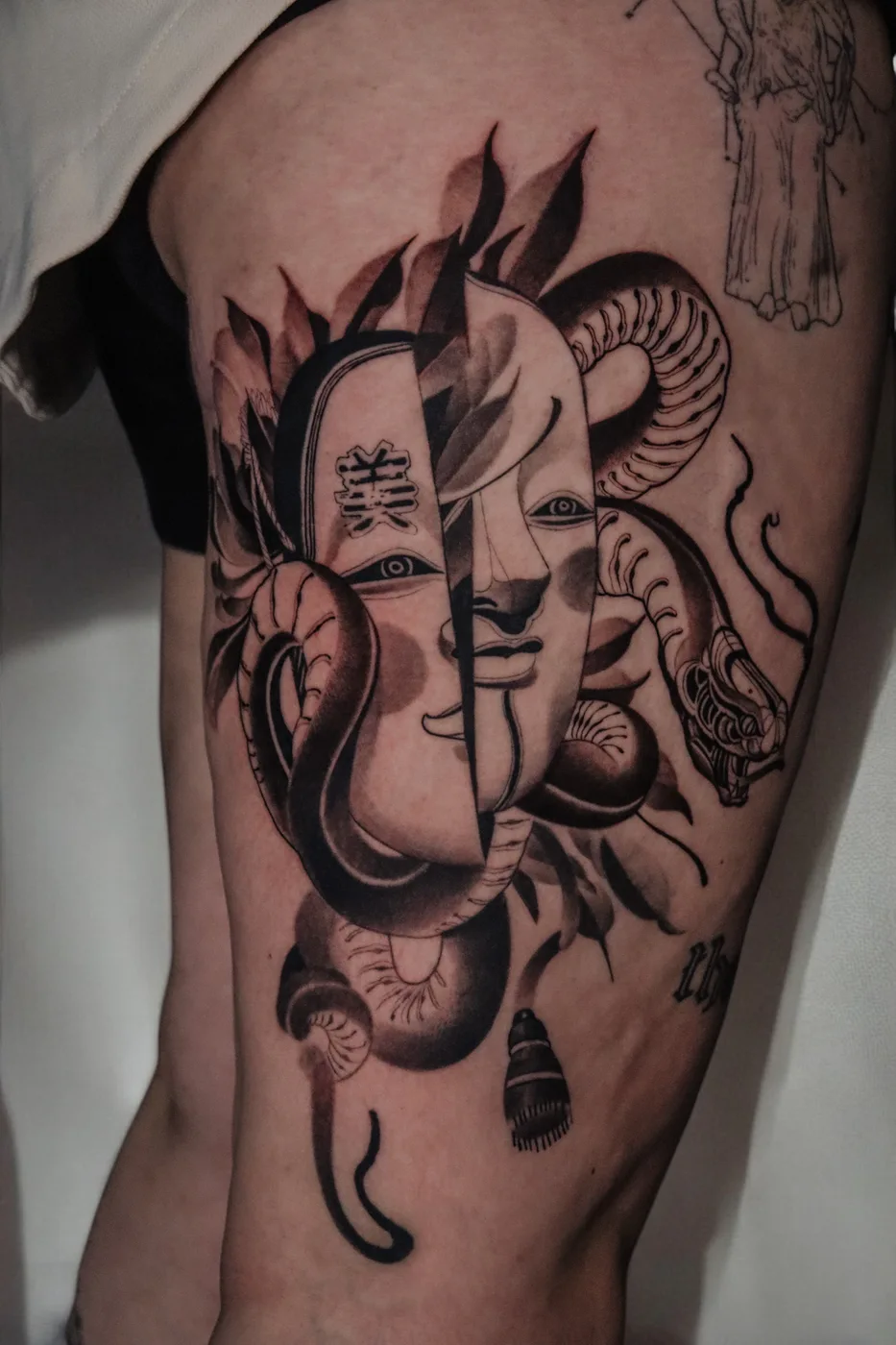
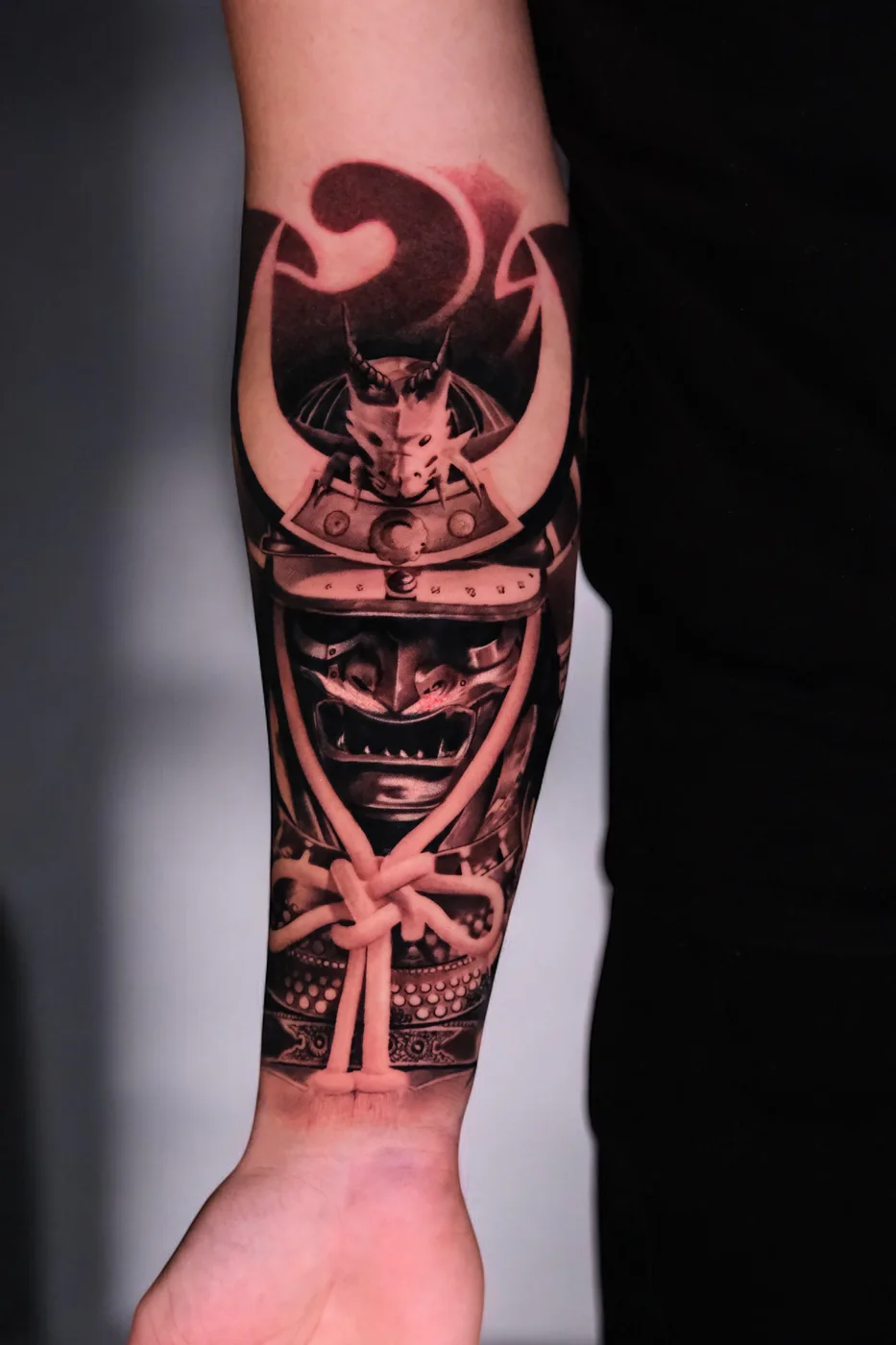
Japanese and Maori are both tattoo traditions with deep roots and their own symbolism, but different origins and visual languages. Maori tattoos (Tā moko) use geometric, mostly black patterns from Polynesia. Japanese tattoos use figurative motifs, dragons, koi, the Hannya mask, samurai, tied together by flowing background elements like wind or water. Josef executes these motifs in the studio's black & grey technique. If geometric patterns with Polynesian meaning are more what you're after, take a look at the Maori page too.
A Japanese tattoo lives on traditional imagery, dragons, koi, the Hannya mask, samurai, each motif carrying its own meaning. The fair concern: does a larger composition end up looking like several separate images side by side instead of one continuous piece?
Josef works these motifs in the studio's own black & grey technique, not the traditional full-color, full-body variant (Irezumi/Horimono). Background elements like waves, wind or clouds connect the individual motifs into one surface that continues around the arm, leg or back, rather than reading as an isolated image. That connection to the body is what decides whether a Japanese tattoo reads as one continuous piece.
Josef talks through beforehand which motifs fit your story and how they become one continuous composition across the chosen area, so the finished tattoo reads as a single surface, not a collection of separate images.
FAQ
What's the difference between Japanese and Maori?
Both are tattoo traditions with deep roots but different origins: Maori (Tā moko) uses geometric, mostly black patterns from Polynesia, while Japanese uses figurative motifs like dragons, koi or the Hannya mask, tied together by flowing background elements. See the section above for more.
Does a Japanese tattoo have to be large?
No. Single motifs like a koi or a Hannya mask work on their own too. Large connected compositions, a full sleeve for example, are traditional, but not a requirement.
Is a Japanese tattoo done in color?
Not here. Josef works the traditional motifs, dragon, koi, Hannya mask and samurai, in the studio's black & grey technique. We don't offer the colored, full-body variant of this style (traditional Irezumi/Horimono).